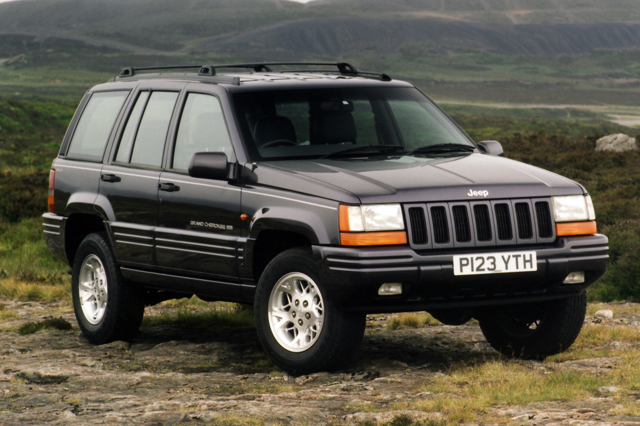
...ZJ Licensed (Best Estimate)
...SORN
...Total Registered
...Change vs Prev. Quarter
Loading...
How this estimate is calculated: Four DVLA model entries (Orvis A, Laredo A, Laredo TD, Limited TD) only ever contained ZJs, so they are counted in full. The "Grand Cherokee Limited" and "Grand Cherokee Ltd Auto" entries mix ZJ, WJ and WK generations, so from those only cars built 1998 or earlier are counted. The result: 190 ZJs licensed and 1,371 still registered at the 2025 snapshot. Cohort analysis by AutoCensus. Full methodology below.
Survival Over Time
View as:
| Period | Licensed | SORN | Total |
|---|---|---|---|
| Loading... | |||
Source: DVLA licensing data. Best estimate series (annual): 1994 to 1998 exact, since every Grand Cherokee then registered was a ZJ; 2014 onward exact AutoCensus cohort anchors; 1999 to 2013 estimated by interpolation between those exact segments, following the confirmed entries' shape. Confirmed entry series: exact quarterly DVLA figures, full history.
Confirmed DVLA Entries by Variant
Loading...
| Variant | Licensed | SORN | Total | Notes |
|---|---|---|---|---|
| Loading... | ||||
About This Data
The best estimate (the headline figure): The DVLA database holds six Grand Cherokee model entries. Four of them (Orvis A, Laredo A, Laredo TD, Limited TD) only ever contained ZJs, so they are counted in full. The other two ("Grand Cherokee Limited" and "Grand Cherokee Ltd Auto") mix ZJ, WJ and WK cars. AutoCensus splits every Grand Cherokee entry by generation using the DVLA build year records, which separates out the ZJs among those shared Limited entries. At the latest quarter (2026 Q2) this gives 173 licensed and 1,349 still registered: 93 licensed and 525 SORN counted exactly from the four ZJ only entries, plus an estimated 80 licensed and 651 SORN from the shared entries. Figures are confirmed at each year end from 2014, with a best estimate in between. The gap between the best estimate and the confirmed floor was widest in the early years because the volume selling petrol Limited auto, the main UK model, was registered under the shared entries; the four ZJ only entries held the niche variants. The chart's best estimate line covers 1994 to now: the DVLA family total to 1998 (before the WJ existed, every Grand Cherokee was a ZJ), confirmed year ends from 2014, and AutoCensus estimates for 1999 to 2013.
The confirmed floor (the "Confirmed Entries Only" view): Just the four pure ZJ entries, summed with no filtering or estimation. These are exact DVLA figures, updated quarterly, but they undercount the real fleet because every ZJ registered under the shared Limited entries is excluded. This cohort peaked at 4,438 licensed in 1999, and that peak applies to this view only. The full ZJ fleet peaked at an estimated 12,637 licensed at the end of 1999. The highest confirmed count is 12,123 at the end of 1998.
A note on earlier figures: This site previously estimated the ZJ population by filtering every entry to manufacture years 1999 and earlier, which produced a headline of around 252. That method let 1999 built WJs into the count. Its historical series peaked in 2002, three years after ZJ production ended, which is that contamination made visible. It is no longer used anywhere on this site.
Why Are They Disappearing?
- Sill corrosion. The ZJ is a unibody vehicle. Perforated sills are a structural failure. UK roads and salt accelerate this, and once the sills go the car is uneconomical to repair for most owners.
- MOT failures. The headlamp self levelling system is an MOT requirement on UK spec ZJs. The motors fail with age and cost around £265 per side to replace. Many cars have been SORNed rather than repaired.
- Fuel costs. At current UK petrol prices, a 4.0 litre averaging 20mpg is an expensive daily driver.
- 2009 scrappage scheme. The government incentive of £2,000 against a new car removed a significant number of structurally borderline ZJs permanently.
- ULEZ and clean air zones. Pre Euro 3 petrol ZJs face daily charges in London and several other UK cities.
- Specialist knowledge fading. As fewer garages have experience with these cars, more owners have SORNed rather than find someone willing to work on them.